
One new political reality is complicating the possibility of forming a stable government in Israel: given the electoral draw between the Netanyahu/anti-Netanyahu forces, it is becoming impossible to establish a government without an Arab party. In the present government, Ra’am, the Islamic Party representing mainly the Bedouin population of the Negev, is playing that role. As an Islamic Party belonging to the Muslim Brotherhood (as does Hamas, though the two groups are antagonistic towards each other), Ra’am’s agenda is promoting conservative religious values (they oppose LGBTQ rights, for example) and providing badly needed housing and services to the Arab sector.
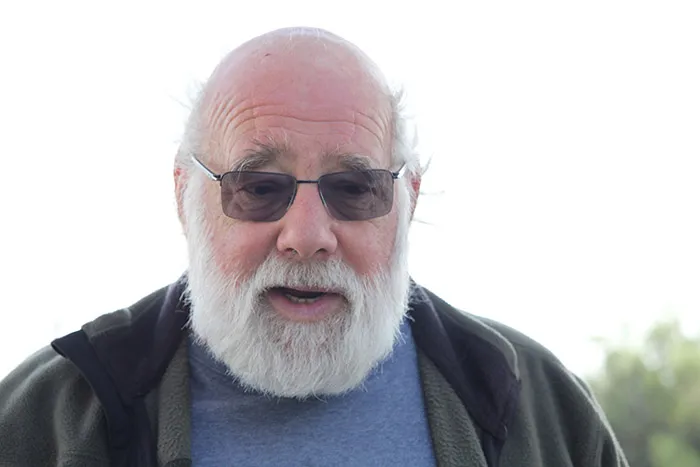
Read Jeff's full article here 'Displacements and Demolitions in the Negev/Naqab' An article by ICAHD member Hilary
Photo: Waleed Alobra
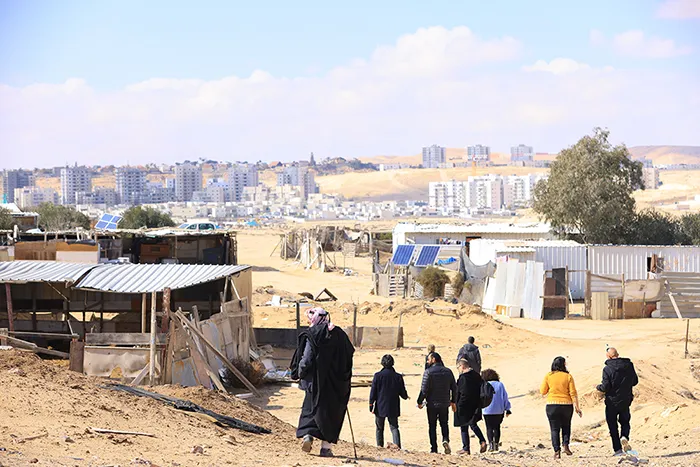
ICAHD member Hilary first heard about the “Unrecognised Villages” from a speaker contacted through Jews for Justice for Palestinians back in 2011. Since then she has visited Israel-Palestine several times, including an ICAHD tour in 2017, and been able to visit several of the villages. The plight of the people of Al Araqib, and the unhappy saga of Umm al-Hiran, has made a deep impression on her.
Here Hilary writes about the Naqab Bedouin, the problems they confront as they try to maintain their indigenous culture in the face of Israeli oppression, and what we can do to help.
Overall, one fifth of Israel’s citizens are Arab – that’s 1.9 million people. Around 300,000 of them, the Bedouin, live in the south, in the Negev/Naqab area, the land stretching from the Gaza border through Beersheva, past the South Hebron Hills and towards the Dead Sea. Though dry, it can be farmed - unlike the area much further south. The Bedouin indigenous citizens from the Naqab, particularly those in the “Unrecognised Villages”, face many difficulties and need our support.
Contrary to popular myth, the Naqab Bedouin are not nomadic. Adalah (The Legal Centre for Arab Minority Rights in Israel) made this point in their Ten Myths About the Bedouin written at the time of the 2012 Prawer Bill. They might use different areas for crop growing in the winter and for the summer grazing of their herds, but they had permanent homes and a recognised system of land ownership long before 1948.
The Bedouin of the Naqab value and wish to retain their indigenous culture and agricultural lifestyle. However the Israeli State has other plans, to “concentrate” the Bedouin into designated new townships; these are some of the poorest in the country, and crime and social ills are rife. The traditional clan structure and farming lifestyle are destroyed. Meanwhile land is “freed up” for new Jewish-only settlements, or extensive “ranches” for a single Jewish family, and for road building and mining. The State plans were encapsulated into the 2011 Prawer Plan, eventually shelved after extensive protest both inside Israel and internationally. Whilst it did not pass into law, nevertheless its aims are still being pursued today.
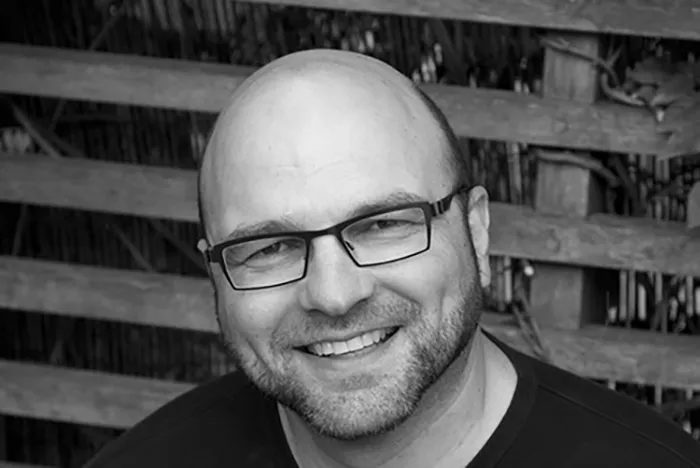
'Exploring the Palestine Issue with Andrew Feinstein in Converstion with Jeff Halper' South African academic, writer and former member of the South African Parliament Andrew Feinstein in discussion with ICAHD’s Jeff Halper as they discussed topics such as South African apartheid, parallels with Israel including the Nation State Law, turning points in the South African liberation movement towards breaking the stranglehold; the arms trade as a major element in supporting the economy, reasons why other governments won’t challenge and call to account.
Watch the webinar here
For more information see https://icahd.org/extended-study-tours/ and write to info@icahduk.org for an application form. Dates for Your Diary Wednesday, 20 July at 5.00pm - ICAHD UK Webinar - details to be announced
Friday, 29 – Sunday, 31 July – JCB Golf Tournament – save the date for involvement
Friday, 26 – Monday 29 August – Greenbelt Festival – Jeff Halper seminar speaker and ICAHD UK will run a stall - https://www.greenbelt.org.uk/
7–17 November 2022 – Study tour to Palestine/Israel - https://icahd.org/extended-study-tours/ Many thanks for your ongoing support. If you're not already a member of ICAHD UK, please consider joining usor make a donation to enable our campaign to spread at this critical time in history. From all at ICAHD UK. https://www.facebook.com/pages/Israeli-Committee-Against-House-Demolitions-UK/366423593418140 Facebook https://www.twitter.com/ICAHDUK/ Twitter http://icahduk.org Website mailto:info@icahduk.org Email
June 2022 Newsletter
* Read Jeff Halper's thoughts on the collapse of the Israeli Government * Consider the plight of the Naqab Bedouin * Watch a recording of the recent ICAHD UK webinar * Join an ICAHD-recommended Study Tour to Palestine/Israel The 'Arab Factor' in Bringing Down the Israeli Government - Jeff Halper Israel is in the midst of a political stalemate. Bennett’s center-right government has resigned and new elections will be held in late October/early November. It doesn’t really matter who wins, certainly in terms of the Palestinian citizens of Israel and the colonized Palestinians of the Occupied Territory. They, like the Left (meaning the Zionist Left, the Labour Party and Meretz, happy partners in Bennett’s government), are irrelevant. The short distance – and major overlaps – between the Netanyahu-loyal Right and the anti-Bibi Center-Right marks the range of Israeli politics. So the results of the next election will produce nothing more than a variation of the present one, with or without Netanyahu, and certainly no change in policy towards the Occupation, i.e., managing and marginalizing it as a political “non-issue.”
Read Hilary's full article here...
Watch Recording of ICAHD UK Webinar:
Read moreExtended Study Tour to Palestine/Israel
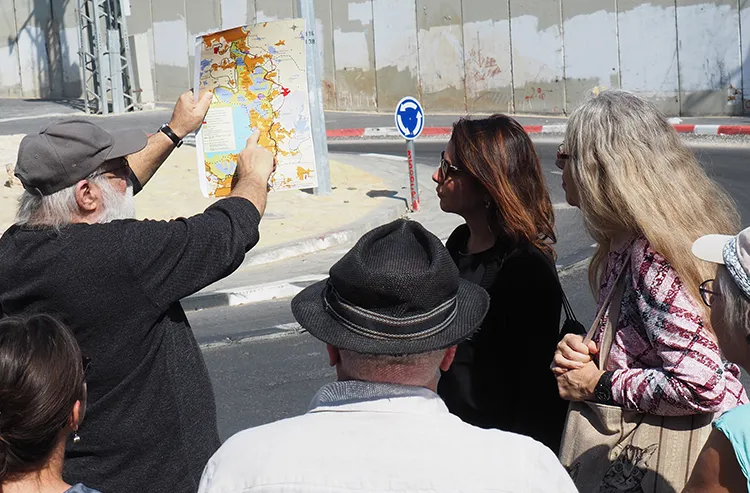
Join us on a life-changing 11 day tour this November Next tour: 7-17 November 2022 These issue-based tours allow participants to meet local people – Palestinians and critical Jews – as they engage with organisations in Jerusalem, the West Bank and within Israel. Around thirty encounters are arranged, and daily debriefing sessions are held in the evening. Participants are immersed in this Middle Eastern experience as they visit the different geographical areas, sample the local food, and experience the rich cultural heritage - nothing compares with being there, witnesing the reality on the ground.